Collection rates
How many eggs can you expect to collect?
There is no definite test to predict exactly how many eggs you will be able to collect and freeze with each cycle.
Generally, somewhere between 8-20 eggs are collected per cycle (12). However, this highly depends on the person’s age and can vary from cycle to cycle. Also, some eggs collected may not be suitable for freezing (e.g. if they have not fully matured).
A small number of women may not have any eggs collected that are suitable freezing. In one study, 6 out of 1000 egg collection cycles resulted in no suitable eggs (27). This study included women who froze their eggs for age-related, and medical reasons such as endometriosis.
Age at the time of freezing has the biggest impact on egg numbers and quality.
Your IVF
Success have an egg freezing calculator which may help estimate the number of eggs you may collect. Click here to visit their website.
Follicle counts
Estimating the number of eggs that may be collected in a cycle is done by counting the number of follicles present in the ovaries. This is done using a transvaginal ultrasound scan. Some follicles counted may not contain any eggs suitable for freezing.
Anti-Mullerian hormone ( AMH )
You may be offered a blood test for AMH . This is so your fertility specialist can check if your levels are around what is expected for a person your age.
AMH tests are used to estimate a woman’s egg reserve and how they may respond to ovarian stimulation. It can only give a rough idea and cannot accurately predict the number of eggs that will be collected, or the quality of those eggs.
It is important to go through your AMH test results with a fertility specialist.
Wiser Healthcare also has more information about using AMH tests. Click here to visit their website.
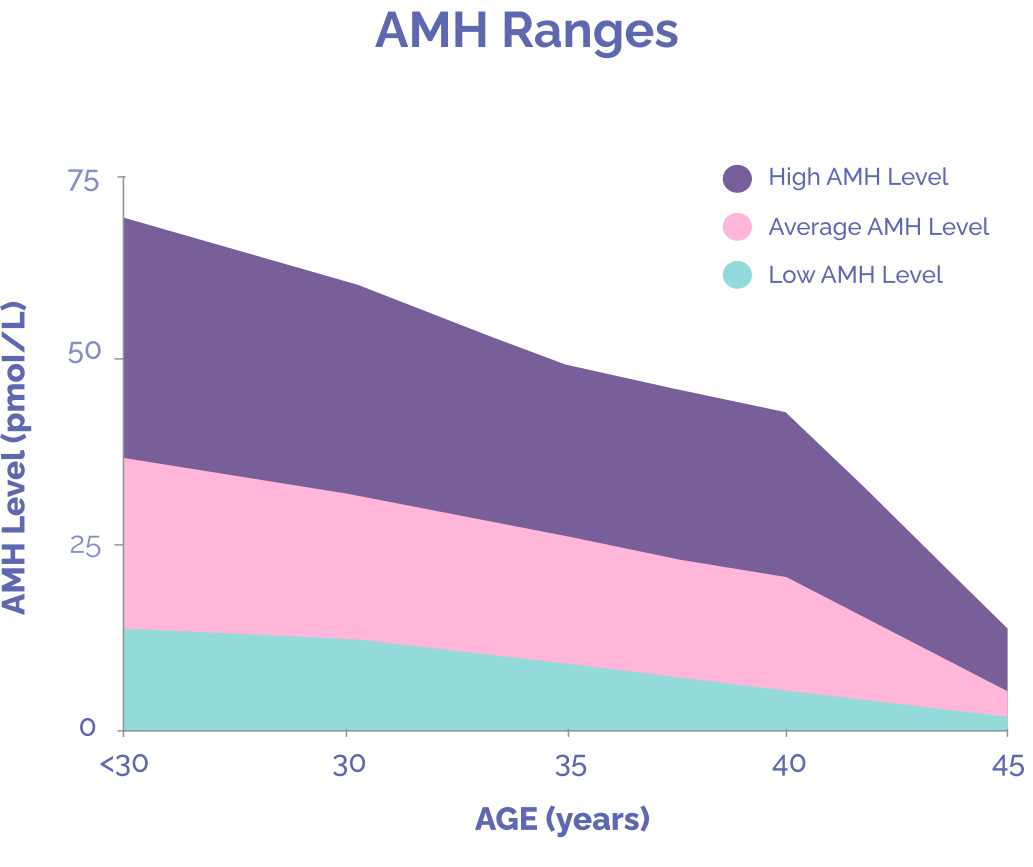
Understanding this graph
AMH levels can vary. Women with the highest AMH levels for their age (top 25%) fall within the ‘High AMH ’ purple section. Women with the lowest AMH levels for their age (bottom 25%) fall within the ‘Low AMH ’ green section (28). While there are no standard cut-offs for AMH levels, less than 7 pmol/L is often considered low (29) and more than 33 pmol/L may suggest PMOS (30). These cut-offs are a guide and can vary between clinics.
Speak to a fertility specialist
for more personalised advice and to discuss what your AMH
level means for you.
How many eggs/cycles do I need?
There is no ‘magic number’ of frozen eggs that guarantee you will be able to have a baby.
Fertility specialists often recommend freezing around 20 eggs to have a good chance of having a baby from those eggs (31).
Older women will usually need to freeze more eggs than younger women to have the same chances of having a baby from their frozen eggs. For example, one study found that women who froze 20 eggs by the age of 35 had a higher chance of having a baby from their eggs compared to women who froze the same number of eggs after the age of 35 (78% vs 50% chance) (32).
Even if eggs are frozen, they may not survive thawing, may not fertilise or implant, or the pregnancy may miscarry.
Different clinics have different success rates too. These are often published on their websites or can be requested. Collecting fewer eggs than expected can be disappointing. Extra emotional support may be needed during this time. Attending a counselling session at your fertility clinic or with another provider may be helpful, as well as arranging a review appointment with your fertility specialist.
Having more than one egg freezing cycle may be recommended, however this may not be an option for you. Still, it can be reassuring to have some frozen eggs, even if the number is lower than expected (33).
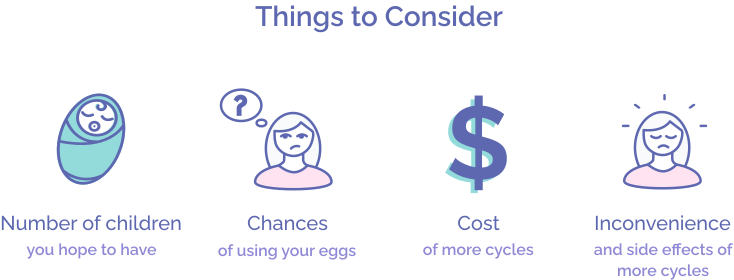
If you are thinking of having more egg freezing cycles you may want to consider:
- The chances of using your frozen eggs
- The number of children you hope to have
- The cost of having more cycles
- The inconvenience and potential side effects from having more cycles