
Using frozen eggs
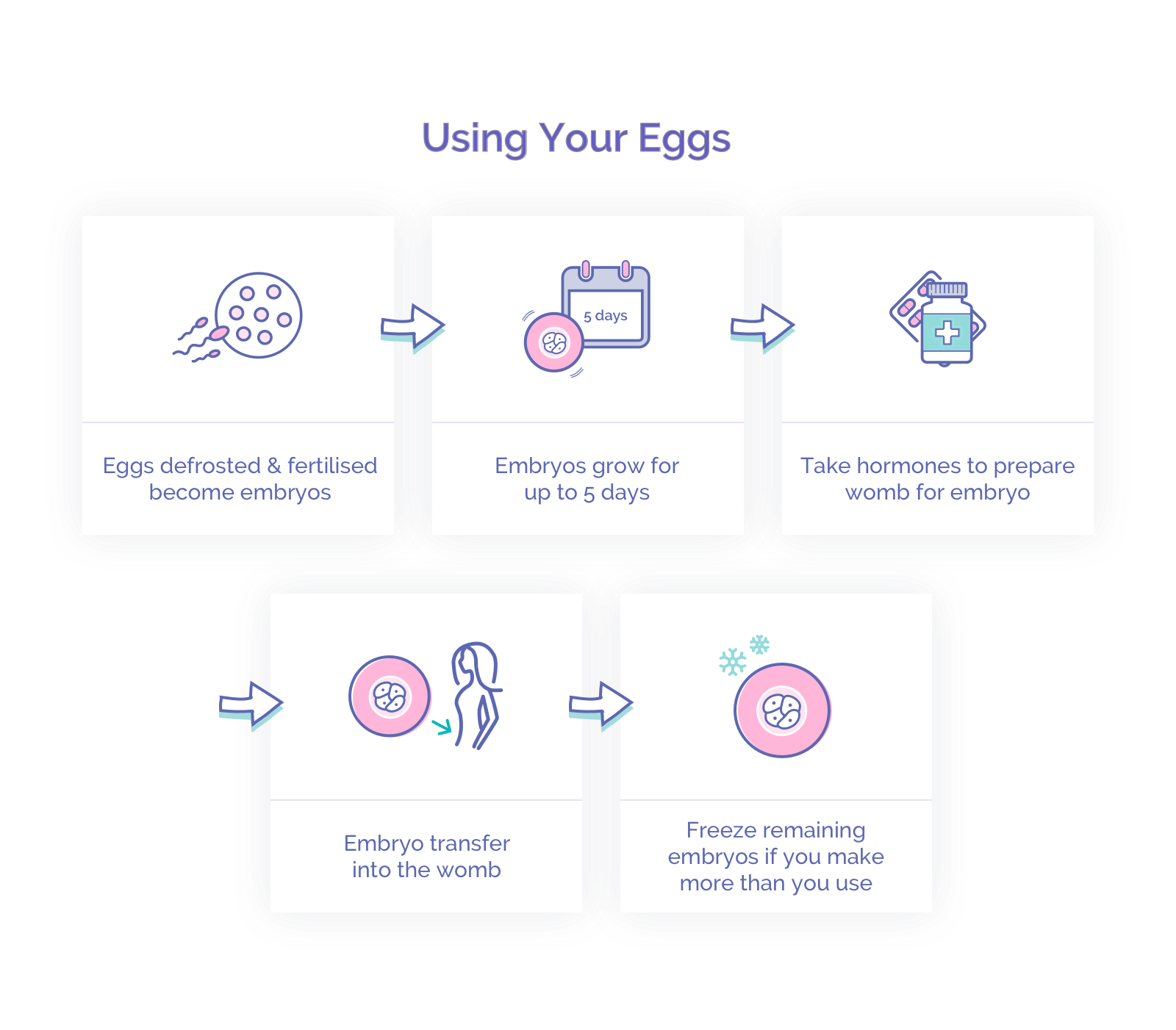
Frozen eggs will need to be thawed and fertilised with sperm from a male partner or donor.
A single sperm will be chosen by an embryologist and directly injected into the thawed egg to create an embryo. This process is called Intracytoplasmic Sperm Injection ( ICSI ). For more information about using ICSI , click here.
The number of frozen eggs that are thawed will be decided with your fertility specialist. Not all eggs will survive the thawing process. Your fertility clinic should be able to provide you with information about egg thawing success rates for their clinic. For more general information about egg freezing success rates, click here.
Embryos will need to develop in the laboratory for 2–5 days. Some are likely to be discarded if they do not develop well. Once a healthy embryo develops, it will then be transferred into the womb. This procedure can be uncomfortable. Pregnancy will depend on whether the embryo implants and develops in the womb.
Hormones may be needed to prepare the womb before embryo transfer. If hormones are taken, they are usually in the form of injections, tablets or pessaries. Embryo transfer can also be done in a natural cycle where no hormones are used. Your fertility specialist will discuss the best approach for you at that time.
If there are healthy embryos remaining, they can be frozen for later use. If they are fertilised with sperm from a partner, legally both of you will need to agree to their use in the future.
You will need to pay ongoing storage fees for your frozen embryos as well as any eggs you may have remaining.
Rules for using frozen eggs
There may be some regulatory and clinic rules for using frozen eggs. For example, some clinics may have upper age limits for IVF treatments.
These restrictions should be explained to you by a fertility counsellor and/or specialist as part of the formal consent procedure before freezing your eggs.
Check with a fertility clinic which rules apply to you.