What affects female fertility?
Women are born with about 2 million undeveloped eggs which sit inside follicles in the ovaries. Most of these eggs are lost before birth.
By puberty (10-12 years old), the number of eggs they have declines to about 300,000-500,000, and by the age 30 about 35,000 eggs remain. Menopause happens when the ovaries run out of eggs.
During each menstrual cycle,
around 5-20 eggs begin to mature, but usually only one fully matures and is released (ovulated). The rest of the eggs are absorbed by the body.
To become pregnant a woman needs to release a mature egg. The egg is then fertilised by a sperm to create an embryo.
Pregnancy happens when the embryo
attaches inside the womb.
Age
As women get older the number and quality of their eggs gradually decline, reducing their fertility.
Egg quality declines because the number of genetic defects in each egg add up over time. Older eggs also have less energy to support a developing embryo.
This makes it harder for an embryo
to grow into a baby, which is why the risk of miscarriage
also increases with age. The risk of miscarriage
is about 11% for women aged 30-34 years and 17% for women aged 35-39 years (4).
Generally, fertility decline starts in a women’s early 30’s and speeds up in their mid-late 30’s (particularly after age 37 years).
There are currently no tests for egg quality.
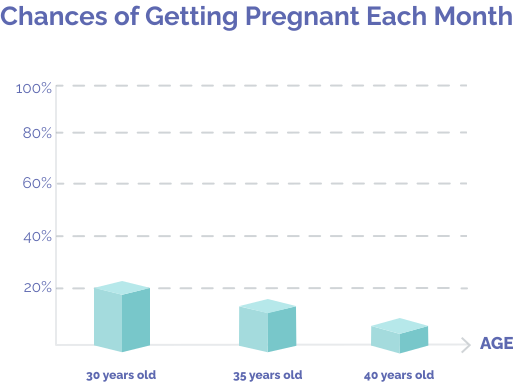
The chances of getting pregnant each month are about (5):
- 20% for a 30 year old (1 in 5 chance)
- 16% for a 35 year old (1 in 6 chance)
- 9% for a 40 year old (1 in 11 chance)
Because fertility declines with age, some women choose to freeze their eggs. These eggs can then be used to try and have a baby in the future.
Note: Understanding how age impacts female fertility is important when deciding about egg freezing. This information is not intended to create any shame or embarrassment for anyone.
Other factors
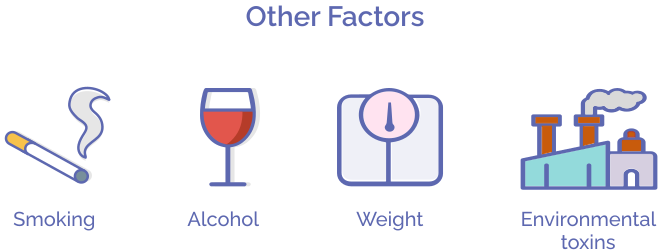
Lifestyle factors such as tobacco smoking, other substance use, poor diet, lack of exercise, and being over or under-weight can reduce fertility in both women and men (6, 7).
Medical conditions such as endometriosis, PMOS, and pelvic infection can also reduce female fertility (8).
There is growing evidence that environmental toxins (also known as endocrine disruptors) may affect fertility. These are toxins found in the air, soil, food, water and products used in everyday life (8, 9).
For more information, ASRM have a podcast and fact sheet about environmental impacts on fertility. The Your Fertility website also has information about how these factors (including environmental toxins) impact fertility and how to improve your chances of having a baby in the future.