
What is egg freezing?
Egg freezing involves collecting eggs from a woman’s ovaries and freezing them for possible later use.
The process
Pre-cycle assessment
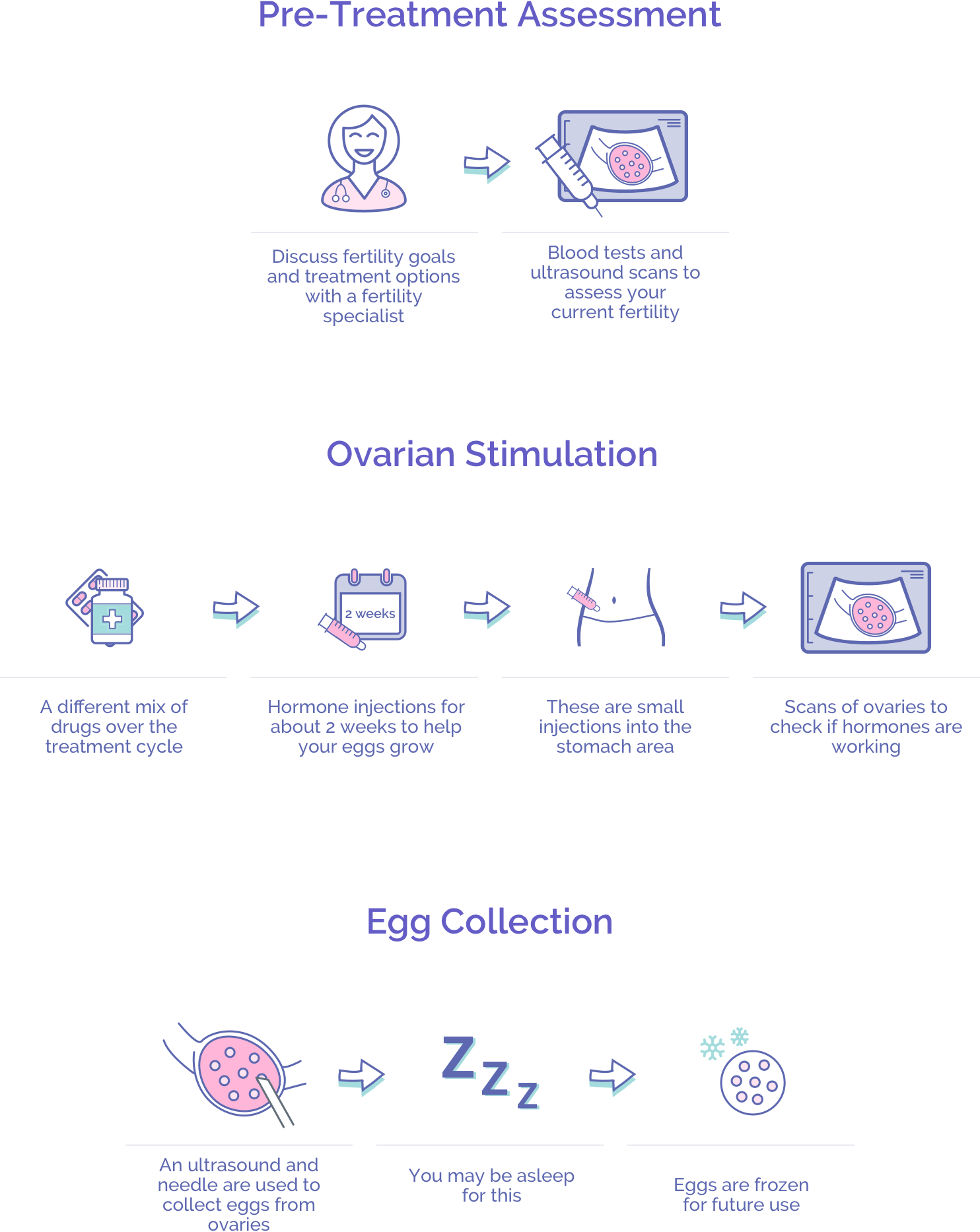
Before egg freezing, a fertility specialist may:
- Discuss your fertility goals
- Discuss your options for achieving these goals
- Run tests such as blood tests and ultrasound scans to assess your current fertility and check if egg freezing is safe for you
Sometimes hormone levels (including AMH
) are measured to try and estimate the number of eggs that might be collected. These tests can only provide an estimate and are not very accurate when predicting the likelihood of becoming pregnant with or without using frozen eggs (10). For more information about AMH
click here.
Discussing your test results with a fertility specialist
will be important when trying to decide whether or not to freeze your eggs.
The number of appointments you have with a fertility specialist
before starting an egg freezing cycle will vary, however at least 1-2 are needed to discuss the results of your fertility tests and decide on a plan together.
Ovarian stimulation
The first step of egg freezing is ovarian stimulation.
This is where:
- Hormone injections are needed for around 8-12 days to stimulate the ovaries and mature as many eggs as possible.
- The injections are usually given into a pinch of skin around the stomach area. The needle is small and has been described as a tiny prick on the skin. Ice can be used to numb the area if needed.
- Other medications might be needed too.
During this time, your fertility specialist or a member from your fertility clinic will monitor how well your eggs are maturing using transvaginal ultrasound scans and/or blood tests.
The number of appointments you will need during this time can vary but typically, women have 3-4 appointments during the 2-week period. Flexibility will be needed during this time. You may require taking time off work and/or other commitments at short notice.
Some women feel worried about self-injecting incorrectly, pain, and accidentally causing harm to themselves (11). A member from your fertility clinic will teach you how to inject these hormones properly. You can also ask someone to help you with the injections if needed.
The hormones used for ovarian stimulation can cause side-effects, and although rare, some complications can happen too. It is difficult to predict what (if any) side-effects someone will experience as they vary from person to person. For more information click here.
Timing of egg collection
The timing of egg collection depends on how long it takes for your eggs to mature. Generally, this takes around two weeks. Usually, a minimum of 2 days’ notice is given to prepare for an egg collection procedure.
Egg collection procedure
Egg collection is a minor surgery. It involves inserting an ultrasound probe into the vagina, and a needle into each follicle to collect the eggs from the ovaries.
The procedure takes around 5-10 minutes, depending on how many follicles you have. What you feel will depend on the type of anaesthetic used by your fertility clinic.
Usually, you would not return to work the day of the procedure, and someone may need to pick you up from the clinic and stay with you overnight. It is generally recommended taking 1-2 days off work to recover after the procedure. Some women might need more time.
Some patients may experience cramping and light bleeding for a few days after their egg collection procedure. Over the counter pain relief can be used to help (e.g. paracetamol or ibuprofen). If pain relief does not help it is important to contact your fertility clinic.
Depending on your clinic, you may have a follow up appointment after the procedure to discuss the outcome. When contacting a clinic about egg freezing you may like to ask about their follow up procedures.
Egg freezing can be physically and emotionally difficult for patients. Click here for some examples of self-care that might be helpful during this time.
Egg freezing and storage
Some eggs collected may be unsuitable for freezing and will be discarded. Click here for more information about egg collection rates.
Eggs that are suitable for freezing will be frozen and stored until you decide to use, dispose, or donate them to another woman or to research (no babies will be made from research – it is illegal).
You will need to pay ongoing fees to store your frozen eggs. Click here for more information about storage costs.
If you decide to use your frozen eggs in the future, you will need to have another IVF procedure. Not every egg will survive the thawing process. Click here for more about using frozen eggs, and here for success rates.
How long does a cycle take?
Cycle times vary, however on average they take about 2 weeks to complete.
If the first cycle does not result in many mature eggs, you may want to have more cycles. This will increase the time and costs required.
On average, women tend to have 1 or 2 egg freezing cycles (12). If you decide to have more you may want to start immediately (however this will depend on medical advice), or wait to decide if you want to go through another cycle again.
Health risks
All medical procedures come with some health risks. These risks are small for eggs freezing but can be serious.
Short term
Less serious side-effects include medication/hormone related symptoms such as moodiness, hot flushes, and bloating.
Physical discomfort from blood tests and ultrasound scans may also be experienced. Some women feel more intense discomfort and require more time off work to recover than expected.
Serious health risks from egg freezing are rare but can still arise. There is a small risk of heavy bleeding (1 in 1000 chance), infection (1 in 5000 chance), and other complications (1 in 5000 chance) (13).
Ovarian Hyper-Stimulation Syndrome
OHSS is another health risk which can arise from having an excessive response to hormone stimulation.
In general, the risk of experiencing moderate to severe OHSS from an ovarian stimulation cycle is 0.16% (or 1 in 625 chance) (13). For egg freezing patients, this risk lower. It is important to speak to a fertility specialist about your chances of developing OHSS and what signs to look out for before beginning a cycle.
Mild OHSS symptoms include (14):
- Abdominal bloating and discomfort
- Nausea
- Vomiting
- Diarrhoea
- Feeling a little short of breath
Severe OHSS may require hospitalisation (14). The risk of death is extremely rare (1 in 30,000 cycles) (15). To date no death relating to OHSS has been recorded in Australia.
Risk factors for OHSS include (16):
- A high follicle count before ovarian stimulation (e.g. more than 24 follicles)
- A PMOS diagnosis
- A history of OHSS
- Higher than average AMH levels
The risk of OHSS will also depend on the type of hormones used for ovarian stimulation. Your fertility specialist will be able to manage this risk using specific medications.
For safety reasons, OHSS can lead to cycles being cancelled before eggs are collected. Your clinic should be monitoring you closely during your cycle and help you to manage any side-effects if they occur.
Long term
Research into the long-term health effects of egg freezing is limited. However, it is reassuring that IVF procedures in general (which includes ovarian stimulation and egg collection) are not shown to have any long-term negative health effects on a woman.
The health of children born from frozen eggs also appears similar to those conceived naturally or with IVF at birth (17-19).
The long-term health outcomes for children born from frozen eggs are not yet known. However, research suggests that the overall health and development of children born from ART is similar to children conceived naturally (20, 21).
Impact of age
Older maternal (mother’s) and paternal (father’s) age are associated with greater health risks for both mother and baby. For more information, click here.
Will egg freezing reduce my natural fertility?
From what we currently know, egg freezing does not reduce a woman’s natural fertility. There is, however, a very small risk of complications from ovarian stimulation and egg collection (e.g. severe bleeding or infection) which can lower a person’s chances of having a baby in the future. For more information, click here.
Emotional impact
Egg freezing can be an emotional experience. This may partly be due to the hormones given. It is difficult to predict how someone might be affected as everyone is different.
Some women can experience sadness, grief and anxiety. For example, they might feel sad about not being able to have a child at that time, or feel nervous about how many eggs they will collect, and possibly be disappointed if they do not collect as many eggs as expected.The use of needles and other medical procedures can cause discomfort too. If only a few follicles
develop, a fertility specialist
may suggest stopping the cycle which can be disappointing as well.
Other women experience more positive emotions. For example, feeling more “in control” of their fertility or empowered to take action (22, 23). Some patients find the process less emotional than they expected too.
In general, most women who freeze their eggs have little to no regret about their decision (2, 22, 24). However, some factors such as their age at the time of egg freezing, number of frozen eggs, chances of having a baby from those frozen eggs, and how well informed they felt when deciding can impact how they feel about their decision overall (25, 26).
Support and coping strategies
It is important to have good support and coping strategies to use during an egg freezing cycle. You may like to bring a close friend or family member along to your appointments, and/or talk to them when making your decision.
Speaking to a counsellor from a fertility clinic or a different service provider may also be useful. When contacting a fertility clinic you may like to ask how much contact and support you can expect from your fertility specialist
and the rest of the healthcare team before, during, and after a cycle.
Some helpful coping strategies may include:
- Trying relaxation or mindfulness activities (yoga/meditation/breathing exercises)
- Regular and gentle exercise
- Getting adequate sleep
The Better Health Channel has more information and tools to help manage stress. Click here to visit their website.
Collection rates
How many eggs can you expect to collect?
There is no definite test to predict exactly how many eggs you will be able to collect and freeze with each cycle.
Generally, somewhere between 8-20 eggs are collected per cycle (12). However, this highly depends on the person’s age and can vary from cycle to cycle. Also, some eggs collected may not be suitable for freezing (e.g. if they have not fully matured).
A small number of women may not have any eggs collected that are suitable freezing. In one study, 6 out of 1000 egg collection cycles resulted in no suitable eggs (27). This study included women who froze their eggs for age-related, and medical reasons such as endometriosis.
Age at the time of freezing has the biggest impact on egg numbers and quality.
Your IVF
Success have an egg freezing calculator which may help estimate the number of eggs you may collect. Click here to visit their website.
Follicle counts
Estimating the number of eggs that may be collected in a cycle is done by counting the number of follicles present in the ovaries. This is done using a transvaginal ultrasound scan. Some follicles counted may not contain any eggs suitable for freezing.
Anti-Mullerian hormone ( AMH )
You may be offered a blood test for AMH . This is so your fertility specialist can check if your levels are around what is expected for a person your age.
AMH tests are used to estimate a woman’s egg reserve and how they may respond to ovarian stimulation. It can only give a rough idea and cannot accurately predict the number of eggs that will be collected, or the quality of those eggs.
It is important to go through your AMH test results with a fertility specialist.
Wiser Healthcare also has more information about using AMH tests. Click here to visit their website.
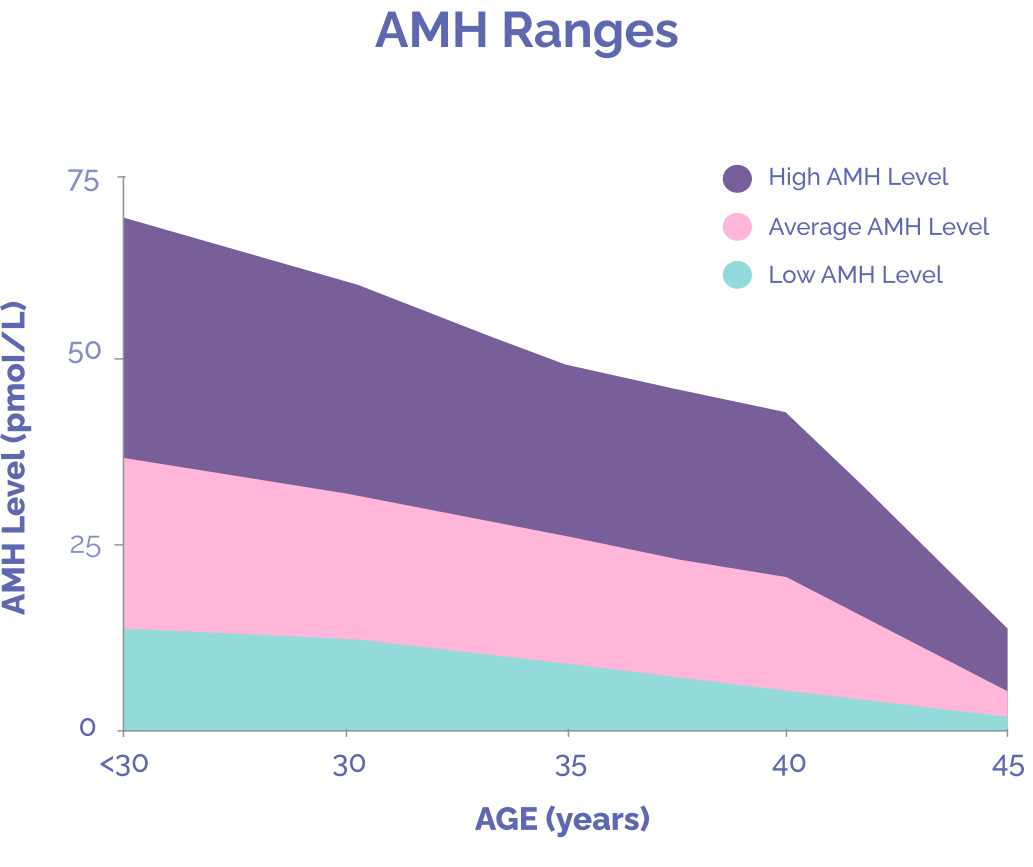
Understanding this graph
AMH levels can vary. Women with the highest AMH levels for their age (top 25%) fall within the ‘High AMH ’ purple section. Women with the lowest AMH levels for their age (bottom 25%) fall within the ‘Low AMH ’ green section (28). While there are no standard cut-offs for AMH levels, less than 7 pmol/L is often considered low (29) and more than 33 pmol/L may suggest PMOS (30). These cut-offs are a guide and can vary between clinics.
Speak to a fertility specialist
for more personalised advice and to discuss what your AMH
level means for you.
How many eggs/cycles do I need?
There is no ‘magic number’ of frozen eggs that guarantee you will be able to have a baby.
Fertility specialists often recommend freezing around 20 eggs to have a good chance of having a baby from those eggs (31).
Older women will usually need to freeze more eggs than younger women to have the same chances of having a baby from their frozen eggs. For example, one study found that women who froze 20 eggs by the age of 35 had a higher chance of having a baby from their eggs compared to women who froze the same number of eggs after the age of 35 (78% vs 50% chance) (32).
Even if eggs are frozen, they may not survive thawing, may not fertilise or implant, or the pregnancy may miscarry.
Different clinics have different success rates too. These are often published on their websites or can be requested. Collecting fewer eggs than expected can be disappointing. Extra emotional support may be needed during this time. Attending a counselling session at your fertility clinic or with another provider may be helpful, as well as arranging a review appointment with your fertility specialist.
Having more than one egg freezing cycle may be recommended, however this may not be an option for you. Still, it can be reassuring to have some frozen eggs, even if the number is lower than expected (33).
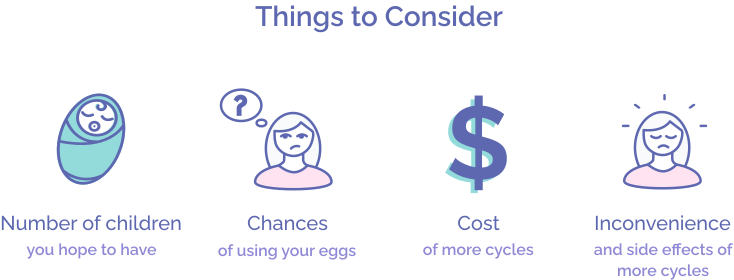
If you are thinking of having more egg freezing cycles you may want to consider:
- The chances of using your frozen eggs
- The number of children you hope to have
- The cost of having more cycles
- The inconvenience and potential side effects from having more cycles
Success rates
Not every frozen egg will result in a baby.
When thinking about egg freezing you may like to consider:
- How many eggs your fertility specialist expects will be collected in a cycle
- Your ideal number of frozen eggs (possibly over multiple cycles)
- How likely your frozen eggs are expected to survive the thawing process
- Your chances of having a baby from each thawed egg
- The number of egg freezing cycles you can and want to go through
- The number of children you may want to have using frozen eggs
Chances of egg freezing working
Let’s say you freeze 10 eggs.
If the time comes for you to use your eggs, around (34):
- 7-8 will survive thawing
- 5-6 thawed eggs will become embryos
- 1-2 of those embryos have the potential to become a baby
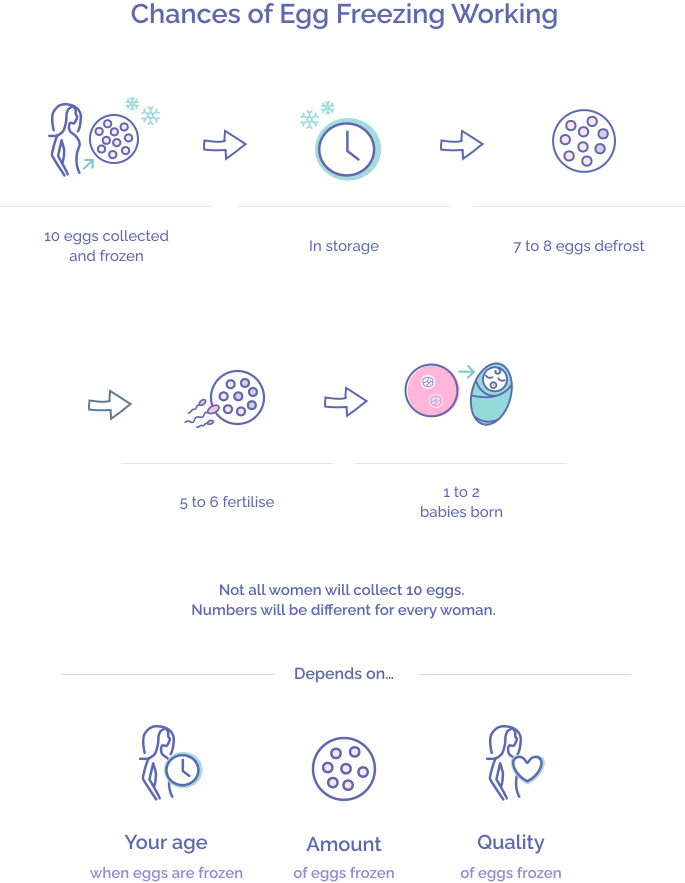
This is a general example, and outcomes will be different for everyone. A fertility specialist will be able to give you more personalised advice.
Your chances of having a baby will depend on:
- Your age when eggs are frozen
- The number and quality of your frozen eggs
- Other factors (e.g. quality of the sperm used to fertilise the eggs)
If you would like the option of having more than one child from frozen eggs you may need to freeze more eggs.
Your IVF Success have an egg freezing calculator which may help estimate your own potential success rates. Click here to visit their website.
The only way to know if your frozen eggs will become a baby is to try and use them. If they do not work and you want to continue trying to have a baby, you may be able to use IVF with your own eggs, or donor eggs/ embryos if available.
Egg storage
Storage time limits
The length of time eggs are stored does not appear to impact their quality (31).
However, there are rules around how long eggs can be stored which can differ between clinics and Australian states/territories. These rules may change over time.
Talk to a fertility clinic about their storage terms and your options available at the end of this time.
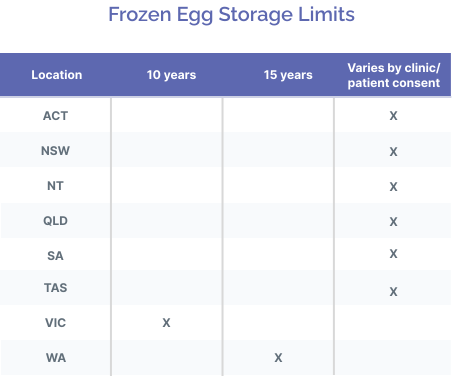
Storage time limits for frozen eggs by Australian state/territory (as at May 2026) (35-38).
Storage costs
You will need to pay ongoing storage fees for your frozen eggs (e.g. $500-$600 per year). Storage fees may change over time. This is important to consider long term when making your decision.
Age limits
There may be upper age limits for using frozen eggs which can vary across clinics. Please speak to a fertility clinic about their specific requirements.
What happens if I cannot be contacted?
It is important to advise your clinic if your address or other contact details change. Procedures will vary between fertility clinics if you are unable to be contacted after freezing your eggs. Generally, patients are responsible for maintaining contact with their clinic. You may like to ask a fertility clinic what they would do in this case.
Egg freezing costs
The cost of egg freezing varies across fertility clinics.
In Australia, one egg freezing cycle can cost between $7,000 and $15,000 (including medications, anaesthetic fees, and hospital fees)*. The cost for hormone medications can vary by patient. Fertility specialist consultations are generally not included in this price, and there may be additional costs for some blood tests and scans.
The cost for additional egg freezing cycles will generally be the same as the first one or will be slightly cheaper depending on the clinic.
Ongoing storage fees will also need to be paid. These fees vary across clinics but can be around $500-$600 per year*. Storage fees may change over time.
When contacting a fertility clinic, it is important to ask for the full cost of everything needed to go through an egg freezing cycle and to store your eggs.
The cost of egg freezing can add to the difficulty of making your decision and it may be unaffordable. Consider how many cycles you can afford, and how long you would store your eggs for.
*Estimate is based on information from a range of Australian fertility clinic websites in 2026. Egg freezing costs vary between clinics and may change over time. Please speak to a fertility clinic for more personalised advice.
Rebates and reimbursements
Medicare may partially cover the cost for fertility specialist appointments if you have a valid GP referral.
Medicare generally does not cover any cost for egg freezing for age-related reasons. However, you may qualify for a rebate if your fertility specialist identifies an eligible medical condition during your assessments. It is important to speak to a fertility specialist about whether any Medicare rebates apply to you for egg freezing.
Some private health insurance companies may reimburse some costs (e.g. hospital fees), however there are still likely to be large out of pocket expenses to cover. If you have private health insurance, you may like to ask your provider what they cover.
Some workplaces may also reimburse some costs for egg freezing. If this is available at your workplace, please check with what they cover.
Costs of using frozen eggs
There are more costs to consider if you decide to use your frozen eggs. These may include the costs for appointments, counselling, procedures, medications, and donor sperm (if you decide to use it). Some of these costs may have Medicare rebates. Check with your fertility clinic if there are any rebates available to you.
When is the best time to freeze?
There is no clear answer to this as it will depend on the person.
You may like to consider if egg freezing is the right decision for you at this time (or in the future), given the costs, your age, and personal circumstances.
Freezing eggs at a younger age could mean more higher quality eggs are collected but it may be unaffordable at the time. Freezing eggs at an older age could mean fewer good quality eggs are collected and more cycles may be needed.
What else do I need to know?
Intra-Cytoplasmic Sperm Injection ( ICSI ) is generally used to fertilise frozen eggs.
If you use your eggs with a male partner who has a fertility problem, ICSI can also help improve your chances of having a baby.
From what we currently know, children born using ICSI have a slightly higher chance of birth abnormalities compared to children born naturally. However, this difference may relate to the reason why ICSI is used (e.g. to treat fertility problems) rather than the procedure itself.
For more information, ASRM have a fact sheet about using ICSI .
Where can I freeze my eggs?
The first step is to ask your GP for a referral to a fertility specialist.
The Fertility Society of Australia and New Zealand has a list of accredited fertility clinics within Australia. Click here to visit their website.
When contacting a clinic, ask if they offer egg freezing as well as counselling support before and during a cycle as this can be very helpful for some women.