
IVF with own eggs
What is IVF ?
In-Vitro Fertilisation ( IVF ) involves collecting eggs from the ovaries and fertilising them with sperm in a laboratory. This is used to help overcome fertility issues which can arise from both men and women when trying to have a baby.
IVF procedures include ovarian stimulation, egg fertilisation and embryo transfer. Some of these procedures are also used for egg freezing, embryo freezing, and using donor eggs or embryos.
In this section of the website, we are referring to using IVF
with ‘fresh eggs’. This means collecting and using a person’s eggs straight away rather than freezing them for later use.
Using IVF
Eggs are collected in the same way as egg and embryo freezing.
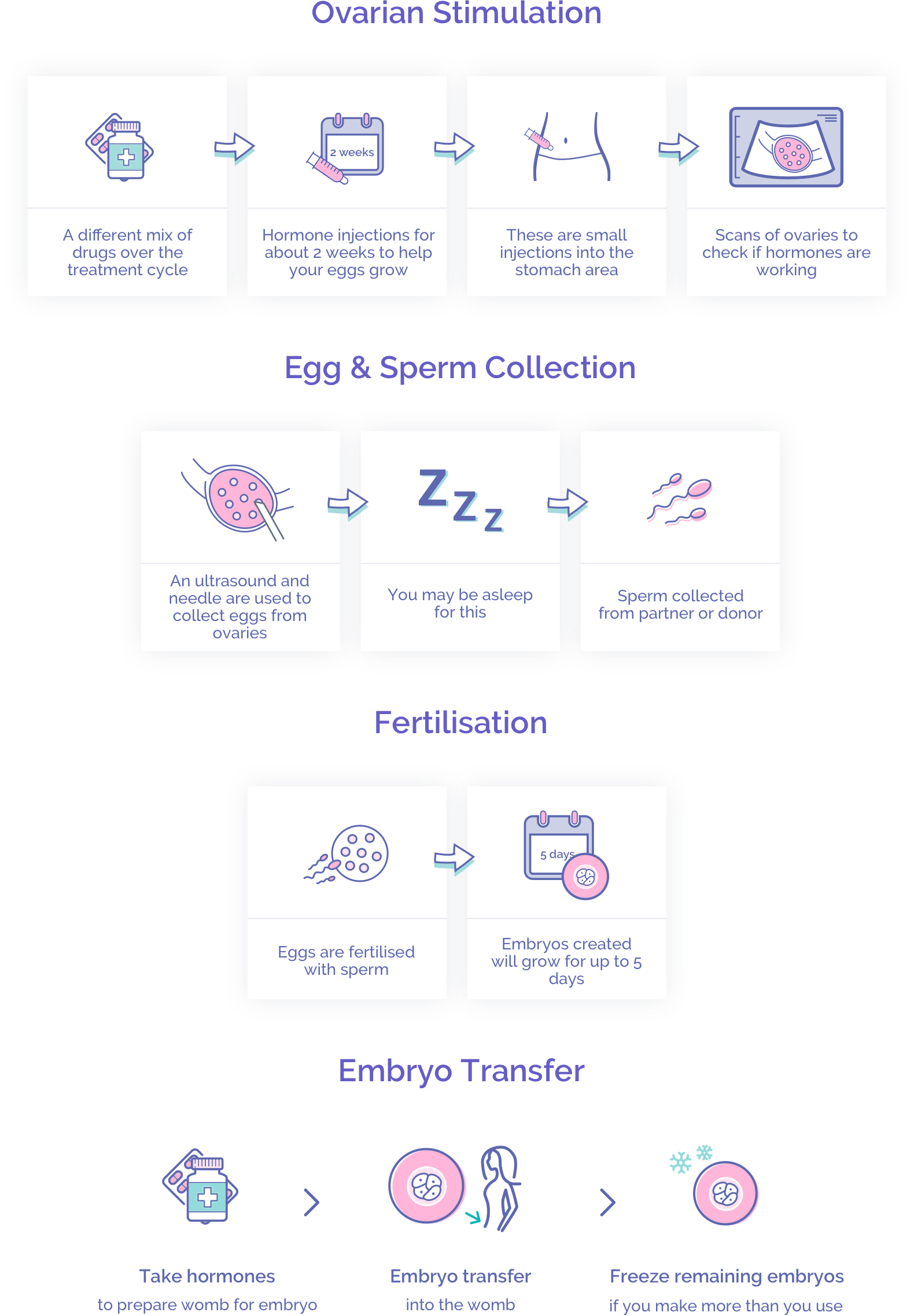
IVF involves:
- Daily hormone injections for about 2 weeks to help mature your eggs. Other medications might be needed too.
- A small procedure is then performed to collect as many eggs as possible from the ovaries.
- Egg and sperm are added together to try and create embryos. This might need to be done using ICSI . For more information about ICSI , click here.
Not all embryos develop well, and some are likely to be discarded. Once a healthy embryo has developed it is placed into the womb.
You may need to take hormones to prepare your womb before embryo transfer however, it can also be done in a natural cycle where no hormones are used. Your fertility specialist will discuss with you whether this is needed at the time.
You will then need to wait about 2 weeks to find out whether you are pregnant.
You can also choose to freeze some of the eggs you collect unfertilised, and/or any healthy embryos you have remaining after your IVF cycle.
What are the chances of IVF working?
Let’s say you collect 10 eggs.
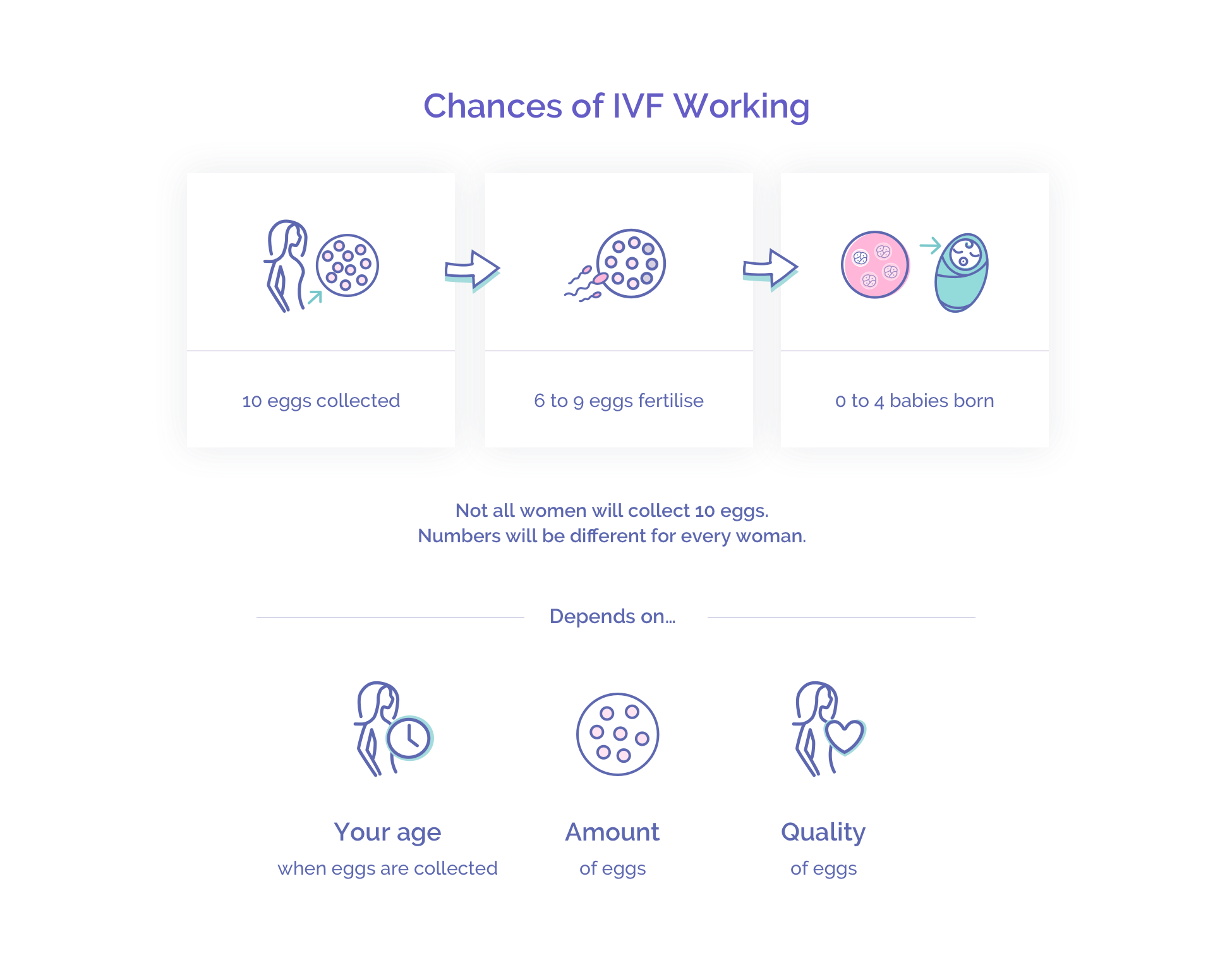
These estimates are averages and will change depending on the quality of eggs and sperm used. A fertility specialist will be able to give you more personalised advice.
Understanding success rates can be difficult. The Victorian Assisted Reproductive Treatment Authority has some useful information which may help explain how to understand these rates, click here.
Costs
The cost of IVF and donor sperm (if you are planning to use it) varies across clinics.
Talk to a fertility clinic about pricing estimates, and possible reimbursements available from Medicare and your private health fund provider (if you have one).
Are there any other issues?
Any remaining embryos made with a male partner legally belong to both partners, and can only be frozen or used if both partners agree. If the couple separates, it may be possible to use the frozen embryos if one partner donates the embryos to the other.
Australian states and territories also have storage time limits for frozen embryos. Click here for more information.
If you do not use all of the embryos created, you can choose to freeze, dispose, or donate them to another woman or research.
Where can I get this done?
The first step is to see a GP for a referral to a fertility clinic.
The Fertility Society of Australia has a list of accredited fertility clinics within Australia.
You can enquire with specific clinics about the services they have available (e.g. IVF and donor sperm facilities).