Wait and see what happens
Rather than acting now, you could ‘wait and see’ what happens in life.
This could mean:
- Waiting to see if you want to have children;
- Waiting until you meet a partner or for a relationship to grow, or;
- Trying naturally in the future when you feel ready to have a child.
Waiting to see what happens could also mean that you are not able to have children naturally.
If this happens, you may like to consider:
- Living childfree;
- Using IVF with your own eggs;
- Using IVF with donated eggs or embryos, or;
- Adoption or fostering.
Living Child-Free
Some people fear they will regret not having children, their life will have no meaning, or they will be viewed as selfish or a failure. Further pressure can also come from family and/or friends for example if they are told they will regret not having children in the future.
However, many people live a very meaningful and enjoyable lives without having children. For example, having greater flexibility with their lifestyle (e.g. travelling, working and living overseas etc), greater financial wealth, less stress and feeling they have made a positive impact on the environment are some of the benefits of not having children. Click here for an article about the positive experiences of women who live childfree.
Being childfree can be challenging for those who wanted to have children but were unable to. For others, this is an active choice and is less challenging. Click here for a list of other books for people who choose not to have children or cannot have children, which may be useful.
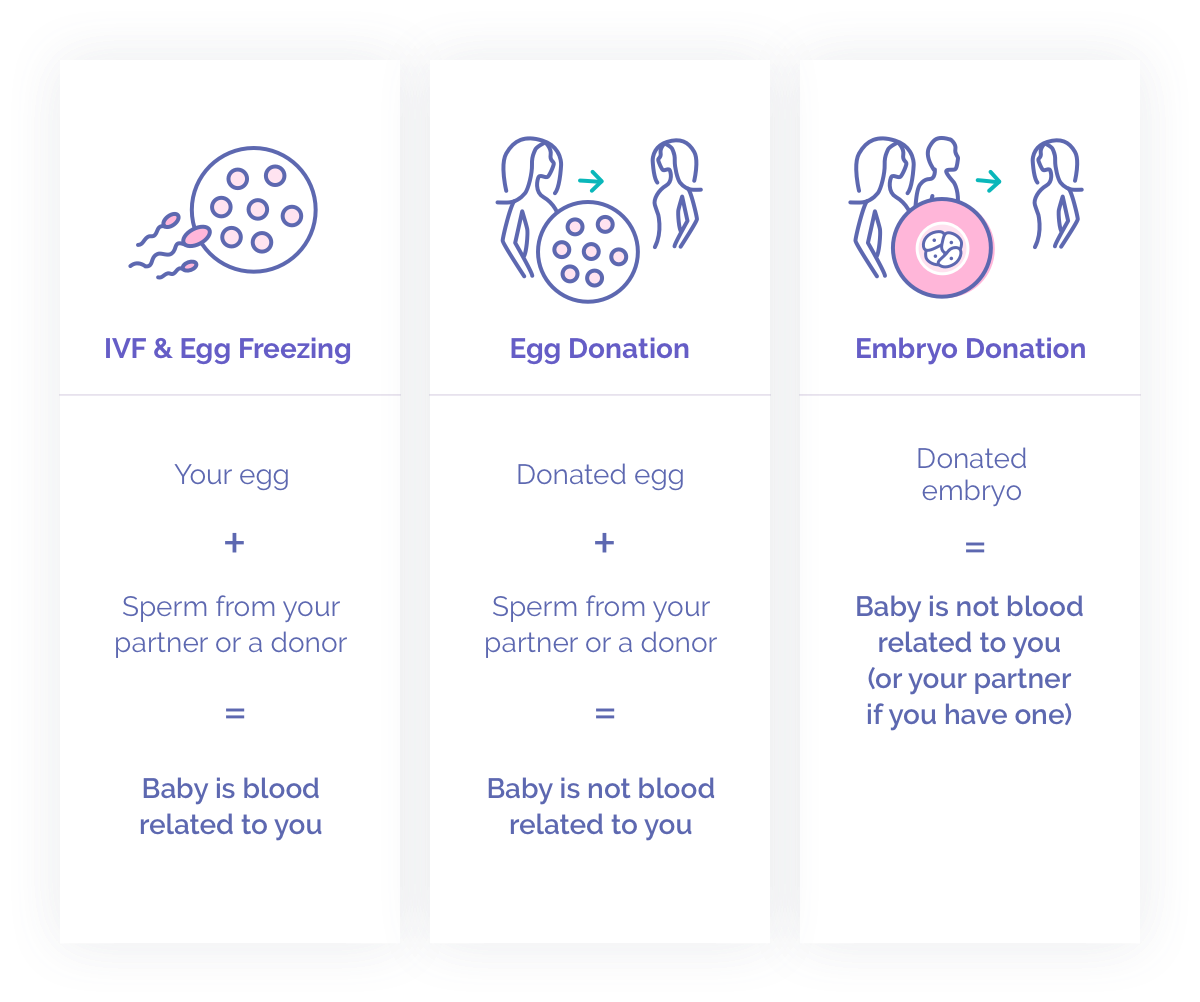
IVF using your own eggs, donor eggs or donor embryos
IVF could be used in the future with your own eggs, donor eggs or donor embryos. Using your own eggs can be more difficult as the number and quality of a woman’s eggs decrease over time. For more information about using IVF click here.
Egg Donation
Eggs donated by another woman are fertilised with sperm to create embryos. A healthy embryo is then implanted into the womb. Children born from donated eggs will be not be blood related to their birth mother but may be related to their partner (as a birth father).
Egg donors can be known or from a clinic list. An egg donor should ideally be under the age of 35 years and have completed their own family. It can often be difficult to find an egg donor, but the internet is now helping to connect people to potential donors.
Embryo Donation
Embryos are donated by a couple, and a healthy embryo is then implanted into the womb. These couples have usually been through IVF and have excess embryos in storage.
Children born from donated embryos will not be blood related to their birth mother or their partner (if they have one). They will be blood related to the donor couple. It can often be difficult to find potential embryo donors.
What are the costs involved?
Costs for egg or embryo donations vary.
You might need to reimburse the donor for all reasonable treatment related costs such as travel, time off work for procedures and blood tests etc.
What else needs to be considered about egg or embryo donations?
There are important emotional, practical and legal issues involved with these kinds of treatments. Different states/territories and clinics have different laws and guidelines. All legal and ethical issues around donor use will be discussed in required counselling sessions before they can proceed.
Where can I get this done?
Donor egg or embryo treatments are available at various clinics around Australia.
The Fertility Society Australia has a list of accredited fertility clinics within Australia.
Adoption and fostering
Adoption
- Creates a legal parent-child relationship between people who are not blood related.
- An adopted child takes on the same rights and privileges of a blood related child.
- The adoption process can be difficult, lengthy and costly.
- Australian adoptions are handled by state/territorial government agencies, or approved adoption agencies.
- The adoption processes and criteria can differ between states, territories, and countries.
- More information about adoption can be found at Adopt Change, click here.
Fostering
- A form of home-care provided to children and youth whilst they are unable to live with their parents.
- The time spent by a child in foster care can be long or short depending on their family situation.
- The type of foster care provided also depends on the child’s age, and if they have any problems such as behavioural difficulties or disabilities.
- Foster carers need to provide a safe and supportive home for a child who may be troubled or traumatised.
- The criteria for fostering may differ between states/ territories within Australia.
- More information about fostering can be found at Adopt Change, click here.
Pros and cons of waiting to see what happens
Here are some pros and cons about waiting to see what happens which you may want to think about.
Pros
- Gives more time to be in a better position to have a child.
- Gives more time to consider having children at all.
- Mother and baby will be blood related (if conceived naturally or by using IVF with own eggs).
- Possible IVF cost reimbursements (depending on fertility status at the time).
Cons
- Daily injections and possible side effects from ovarian stimulation (if IVF is used with own eggs).
- The effects of age on fertility are not fully overcome by IVF .
- Donor eggs or embryos can be difficult to find.
- Adoption and fostering can be costly and time consuming.
- Babies born from donor eggs and embryos will not be blood related.